Quick Summary for Chefs
French cuisine has long been characterized by its classic mother sauces: Béchamel, Velouté, Sauce Espagnole, Tomato Sauce, and hollandaise. This article explores how to transform these foundational sauces into delicious plant-based adaptations, utilizing ingredients like cashews, vegetable stock, and plant-based thickeners. By employing these vegan techniques, you can create rich, complex flavors and textures, enhancing your plant-based dishes without sacrificing tradition.
Introduction
As the plant-based movement gains momentum, the culinary world is evolving to adapt traditional techniques to modern dietary preferences. Among the most significant changes are the adaptations of French mother sauces—the cornerstone of classic French cooking. These sauces serve as the foundation for countless dishes and bring a depth of flavor that can elevate even the simplest ingredients. By creatively substituting animal-based components with plant-derived alternatives, we can preserve the essence of these sauces while catering to a vegan lifestyle. In this guide, we’ll delve deep into the vegan adaptations of each mother sauce, celebrating and reimagining these classics while making them suitable for modern plant-based cuisine.
Culinary Data Specifications
| Sauce Type | Key Ingredients | Preparation Time | Cooking Time | Ideal Temperature (°C/°F) | pH Level |
|---|---|---|---|---|---|
| Béchamel | Cashew cream, plant milk | 10 mins | 10 mins | 75-85°C / 167-185°F | 6 – 7 |
| Velouté | Vegetable stock, cornstarch | 10 mins | 20 mins | 80-90°C / 176-194°F | 6 – 7 |
| Sauce Espagnole | Tomato paste, vegetable broth | 15 mins | 2 hours | 90-100°C / 194-212°F | 5.5 – 6.5 |
| Tomato Sauce | Ripe tomatoes, herbs | 10 mins | 30 mins | 90-100°C / 194-212°F | 4.5 – 5.5 |
| Hollandaise | Aquafaba, nutritional yeast | 5 mins | 10 mins | 60-70°C / 140-158°F | 7 – 8 |
Comprehensive Professional Guide (Part 1)
The Techniques and History of Mother Sauces
French cuisine classifies its foundational sauces into five main categories, collectively known as the mother sauces. Each sauce offers distinct characteristics and serves as the base for numerous derivative sauces. Understanding their history and preparation techniques is vital for any culinary enthusiast, especially when adapting them for vegan diets.
-
Béchamel Sauce
- Origin: The Italian ‘Béchamel’ sauce has roots in Tuscany but became popular in France thanks to the chef of Queen Catherine de Medici.
- Traditional Ingredients: Typically made with milk, butter, and flour.
- Vegan Adaptation: Replace dairy milk with cashew cream or any other plant-based milk (like almond or oat milk), thicken with arrowroot powder or cornstarch. The nutty flavor of cashew adds a rich depth to the sauce.
-
Velouté Sauce
- Origin: Known as “velvet” or “soft” sauce, it forms the basis for many gravies.
- Traditional Ingredients: Usually made with white stock, butter, and flour.
- Vegan Adaptation: Use vegetable stock and thicken with cornstarch. For additional flavor, consider adding a splash of white wine combined with a vegan butter.
-
Sauce Espagnole
- Origin: This dark sauce is a cornerstone of French cooking.
- Traditional Ingredients: Made from brown stock, brown roux, and mirepoix (a mixture of onions, carrots, and celery).
- Vegan Adaptation: Create a rich base using roasted vegetables, mushrooms, and tomato paste. For the “brown” aspect, utilize cooked lentils or mushroom bouillon for depth in flavor.
-
Tomato Sauce
- Origin: This sauce has Italian roots but was embraced by French cuisine.
- Traditional Ingredients: Made with fresh tomatoes, aromatic herbs, and olive oil.
- Vegan Adaptation: Use ripe tomatoes; consider blending in vegetables like carrots and bell peppers for sweetness. Don’t forget seasoning with herbs like basil and oregano.
-
Hollandaise Sauce
- Origin: This is a classic emulsion sauce originally made in the area of France.
- Traditional Ingredients: Comprised of egg yolks, butter, and lemon juice.
- Vegan Adaptation: Replace egg with aquafaba (the liquid from cooked chickpeas) and emulsify with nutritional yeast for a cheesy flavor.
Key Takeaways So Far
- Béchamel: Use cashew cream with cornstarch to replicate texture.
- Velouté: Switch to vegetable stock, and enhance with vegan butter.
- Sauce Espagnole: Opt for roasted vegetables to mimic the rich flavor profile.
- Tomato Sauce: Blend in sweet vegetables and aromatic herbs for complexity.
- Hollandaise: Aquafaba is key for emulsion, with nutritional yeast providing depth.
Comprehensive Professional Guide (Part 2)
Step-by-Step Execution for Each Sauce
-
Béchamel
- Ingredients:
- [ ] 1 cup cashews (soaked)
- [ ] 2 cups plant-based milk
- [ ] 2 tbsp cornstarch
- [ ] Salt to taste
- Instructions:
- Blend soaked cashews with plant-based milk until smooth.
- In a saucepan, whisk cornstarch with a small amount of cold water.
- Gradually add the cashew mixture and turn on low heat, stirring consistently.
- Cook until thickened, and season with salt.
- Ingredients:
-
Velouté
- Ingredients:
- [ ] 2 cups vegetable stock
- [ ] 2 tbsp cornstarch
- [ ] 1 tbsp white wine (optional)
- [ ] 1 tbsp vegan butter
- Instructions:
- Heat the vegetable stock in a saucepan.
- In a separate bowl, mix cornstarch with equal water to form a slurry.
- Slowly whisk the slurry into the stock, cooking until thick.
- Stir in white wine and vegan butter before serving.
- Ingredients:
-
Sauce Espagnole
- Ingredients:
- [ ] 2 cups roasted vegetables (carrots, onions, celery)
- [ ] 2 cups vegetable broth
- [ ] 2 tbsp tomato paste
- Instructions:
- Sauté the roasted vegetables until caramelized.
- Add vegetable broth and tomato paste, bringing to a simmer.
- Cook on low for about 2 hours, then strain and reduce if necessary.
- Ingredients:
-
Tomato Sauce
- Ingredients:
- [ ] 4 ripe tomatoes, diced
- [ ] 1 bell pepper, diced
- [ ] 1 carrot, grated
- [ ] 1 tbsp olive oil
- Instructions:
- Sauté bell pepper and carrot in olive oil.
- Add tomatoes and let simmer for 30 minutes.
- Season with salt, pepper, basil, and oregano to taste.
- Ingredients:
-
Hollandaise
- Ingredients:
- [ ] 1/2 cup aquafaba
- [ ] 2 tbsp nutritional yeast
- [ ] 1 tbsp lemon juice
- Instructions:
- Whip aquafaba until soft peaks form.
- Gradually whisk in nutritional yeast and lemon juice to emulsify.
- Serve immediately.
- Ingredients:
Chef’s Secrets (Pro Tips)
- Temperature Control: Always keep sauces on low heat; high heat can break emulsions and alter flavors.
- Texture Elements: Use a high-speed blender for smoother sauces, as texture can make or break a sauce’s appeal.
- Layered Flavors: Build depth by incorporating spices and herbs throughout the cooking process; don’t just rely on last-minute additions.
Essential Gear
- High-Speed Blender: Essential for achieving smooth textures, particularly for sauces like béchamel and hollandaise. A powerful blender ensures homogeneity in your base.
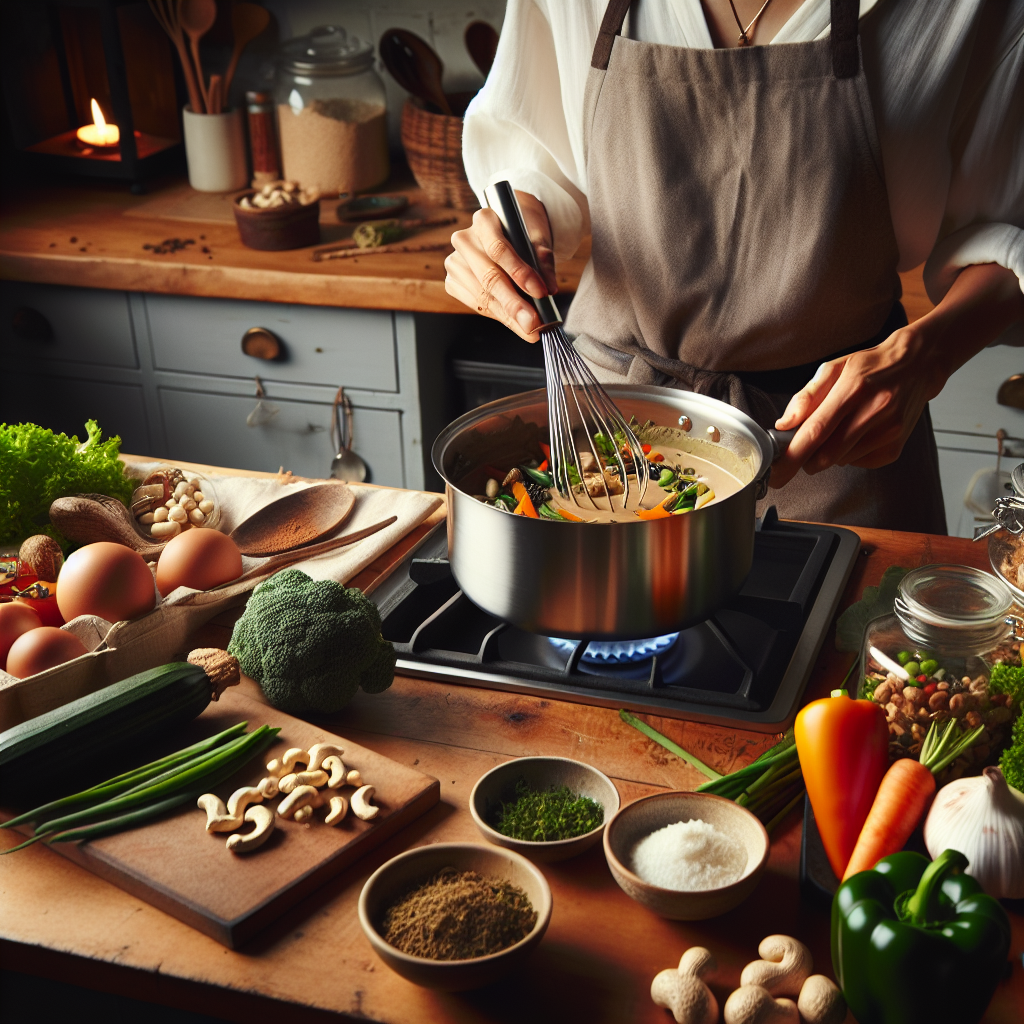
- Saucepan with a Whisk: This combination is fundamental in stirring sauces uniformly to prevent clumping and ensure even heat distribution.
- Fine Mesh Strainer: Useful for sauces like Espagnole or when blending vegetables for a smoother texture.
Conclusion
Venturing into the world of vegan adaptations of French mother sauces opens up endless possibilities for flavor and culinary creativity. By leveraging plant-based ingredients, you can retain the culinary essence of these classic sauces while aligning them with modern dietary preferences. As you experiment with these adaptations, remember to taste and adjust, and don’t hesitate to infuse your unique spin. Explore the art of sauce-making in your kitchen today, and elevate your plant-based dishes to new heights!
For more extensive insights into culinary techniques and plant-based cooking, consider exploring resources like Le Cordon Bleu and Food Research Journal (target=”_blank”).
With this comprehensive guide, you’re well on your way to mastering vegan adaptations of French mother sauces—happy cooking!